
Prerequisites
No prior experience required for beginner tracks
A laptop and reliable internet for online classes
Cybersecurity
Prepare for ethical hacking and security testing with practical labs, attack-and-defence concepts, and CEH-aligned instruction.
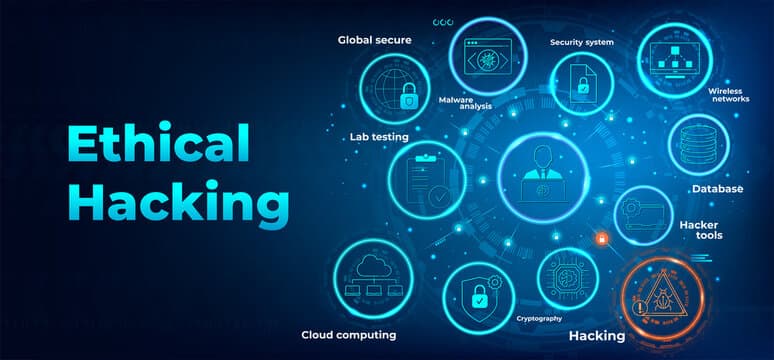
What you will learn
Upcoming classes
Admissions will confirm the start date, class time, learning format, and availability before you make a commitment.
Ask for the next class dateCurriculum
Information Security Overview
Cyber Kill Chain Concepts
Hacking Concepts
Ethical Hacking Concepts
Information Security Controls
Information Security Law
Footprinting Concepts
Footprinting through Search Engines
Footprinting through Web Services
Footprinting through Social Networking Sites
Website Footprinting
Whois Footprinting
DNS Footprinting
Network Footprinting
Footprinting through Social Engineering
Footprinting Tools
Footprinting Countermeasures
Network Scanning Concepts
Scanning Tools
Host Discovery
Port and Service Discovery
OS Discovery (Banner Grabbing/OS Fingerprinting)
Scanning Beyond IDS and Firewall
Draw Network Diagrams
Enumeration Concepts
NetBIOS Enumeration
SNMP Enumeration
LDAP Enumeration
NTP and NFS Enumeration
SMTP and DNS Enumeration
Other Enumeration Techniques
Enumeration Countermeasures
Vulnerability Assessment Concepts
Vulnerability Classification and Assessment Types
Vulnerability Assessment Solutions and Tools
Vulnerability Assessment Reports
System Hacking Concepts
Gaining Access
Escalating Privileges
Maintaining Access
Clearing Logs
Malware Concepts
APT Concepts
Trojan Concepts
Virus and Worm Concepts
Fileless Malware Concepts
Malware Analysis
Countermeasures
Anti-Malware Software
Sniffing Concepts
Sniffing Technique: MAC Attacks
Sniffing Technique: DHCP Attacks
Sniffing Technique: ARP Poisoning
Sniffing Technique: Spoofing Attacks
Sniffing Technique: DNS Poisoning
Sniffing Tools
Countermeasures
Sniffing Detection Techniques
Social Engineering Concepts
Social Engineering Techniques
Insider Threats
Impersonation on Social Networking Sites
Identity Theft
Countermeasures
DoS/DDoS Concepts
DoS/DDoS Attack Techniques
BotnetsDDoS Case Study
DoS/DDoS Attack Tools
Countermeasures
DoS/DDoS Protection Tools
Session Hijacking Concepts
Application-Level Session Hijacking
Network Level Session Hijacking
Session Hijacking Tools
Countermeasures
IDS, IPS, Firewall, and Honeypot Concepts
IDS, IPS, Firewall, and Honeypot Solutions
Evading IDS
Evading Firewalls
IDS/Firewall Evading Tools
Detecting Honeypots
IDS/Firewall Evasion Countermeasures
Web Server Concepts
Web Server Attacks
Web Server Attack Methodology
Web Server Attack Tools
Countermeasures
Patch Management
Web Server Security Tools
Web Application Concepts
Web Application Threats
Web Application Hacking Methodology
Web API, Webhooks, and Web Shell
Web Application Security
SQL Injection Concepts
Types of SQL Injection
SQL Injection Methodology
SQL Injection Tools
Evasion Techniques
Countermeasures
Wireless Concepts
Wireless Encryption
Wireless Threats
Wireless Hacking Methodology
Wireless Hacking Tools
Bluetooth Hacking
Countermeasures
Wireless Security Tools
Mobile Platform Attack Vectors
Hacking Android OS
Hacking iOS
Mobile Device Management
Mobile Security Guidelines and Tools
IoT Hacking
IoT Concepts
IoT Attacks
IoT Hacking Methodology
IoT Hacking Tools
Countermeasures
OT Hacking
OT Concepts
OT Attacks
OT Hacking Methodology
OT Hacking Tools
Cloud Computing Concepts
Container Technology
Serverless Computing
Cloud Computing Threats
Cloud Hacking
Cloud Security
Cryptography Concepts
Encryption Algorithms
Cryptography Tools
Public Key Infrastructure (PKI)
Email Encryption
Disk Encryption
Cryptanalysis
Countermeasures
Before the first class
No prior experience required for beginner tracks
A laptop and reliable internet for online classes
Security Analyst: Monitors threats, investigates alerts, and supports defensive security operations.
Penetration Testing Trainee: Assists with authorized vulnerability testing and documentation.
Cybersecurity Consultant: Advises organizations on practical security improvements.
Project experience
Completion credential
Verifiable Loctech certificate of completion with an industry-aligned curriculum.
Questions answered
Beginner tracks assume no prior experience.
Yes — most programs run hybrid and online with live instructor-led classes.
Yes — a verifiable Loctech certificate on completion.
Keep exploring

Cybersecurity

Software Development

Data Science & Analytics